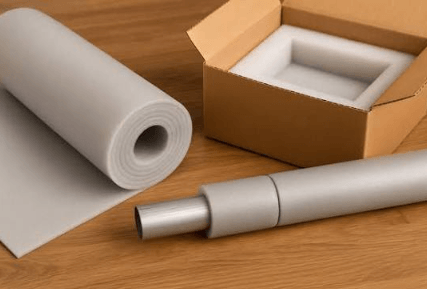
Polyethylene foam material has become a staple across packaging, construction, and industrial applications due to its versatile balance of cushioning performance, chemical resistance, and cost-effectiveness. For buyers and specifiers evaluating this material for a new application, understanding its core properties helps guide more informed material selection.
The Basic Composition and Structure
Polyethylene foam is produced by introducing gas bubbles into molten polyethylene resin, creating a lightweight cellular structure. Depending on the manufacturing process, this can result in either closed cell or open cell structures, each offering distinct performance characteristics suited to different applications.
Chemical Resistance and Durability
One of the notable advantages of polyethylene foam is its resistance to many common chemicals, oils, and solvents, making it a practical choice for industrial packaging and protective applications where the material might come into contact with various substances during shipping or storage.
Thermal Insulation Properties
The cellular structure of polyethylene foam provides meaningful thermal insulation properties, which has led to its widespread use in construction applications like pipe insulation and thermal barrier layers within building envelope assemblies.
Density Range and Performance Trade-offs
Polyethylene foam is manufactured across a wide density range, from very lightweight, low-density foams suited to basic packaging cushioning to higher-density variants designed for more demanding structural or impact-resistant applications.
See also: Entretech.Org
Color and Custom Fabrication Options
Beyond standard white or natural colored foam, many manufacturers offer color options and custom die-cutting or fabrication services, allowing buyers to source foam components pre-shaped for specific packaging inserts or product protection applications.
Comparing Material Options
Buyers sourcing foam for a new application can review the density options, chemical resistance properties, and fabrication capabilities offered by a polyethylene foam material supplier to identify the best match for their specific requirements.
Environmental and Recyclability Considerations
Polyethylene foam is generally recyclable, and buyers increasingly ask suppliers about recycled content options or take-back programs as sustainability considerations become a more significant factor in material sourcing decisions.
Frequently Asked Questions
What makes polyethylene foam suitable for industrial packaging applications? Its chemical resistance, durability, and range of available densities make it well suited to protecting products during shipping and storage across various industrial contexts.
Is polyethylene foam a good thermal insulator? Yes, its cellular structure provides meaningful thermal insulation properties, which is why it’s commonly used in construction applications like pipe insulation.
Can polyethylene foam be custom shaped for specific packaging needs? Many manufacturers offer custom die-cutting and fabrication services, allowing buyers to source foam components pre-shaped for specific product protection or packaging insert applications.
Final Thoughts
Polyethylene foam material offers a versatile combination of cushioning performance, chemical resistance, and thermal insulation properties suited to a wide range of applications. Understanding its density options and fabrication flexibility helps buyers select the right variant for their specific project needs.